The Killer Mountain

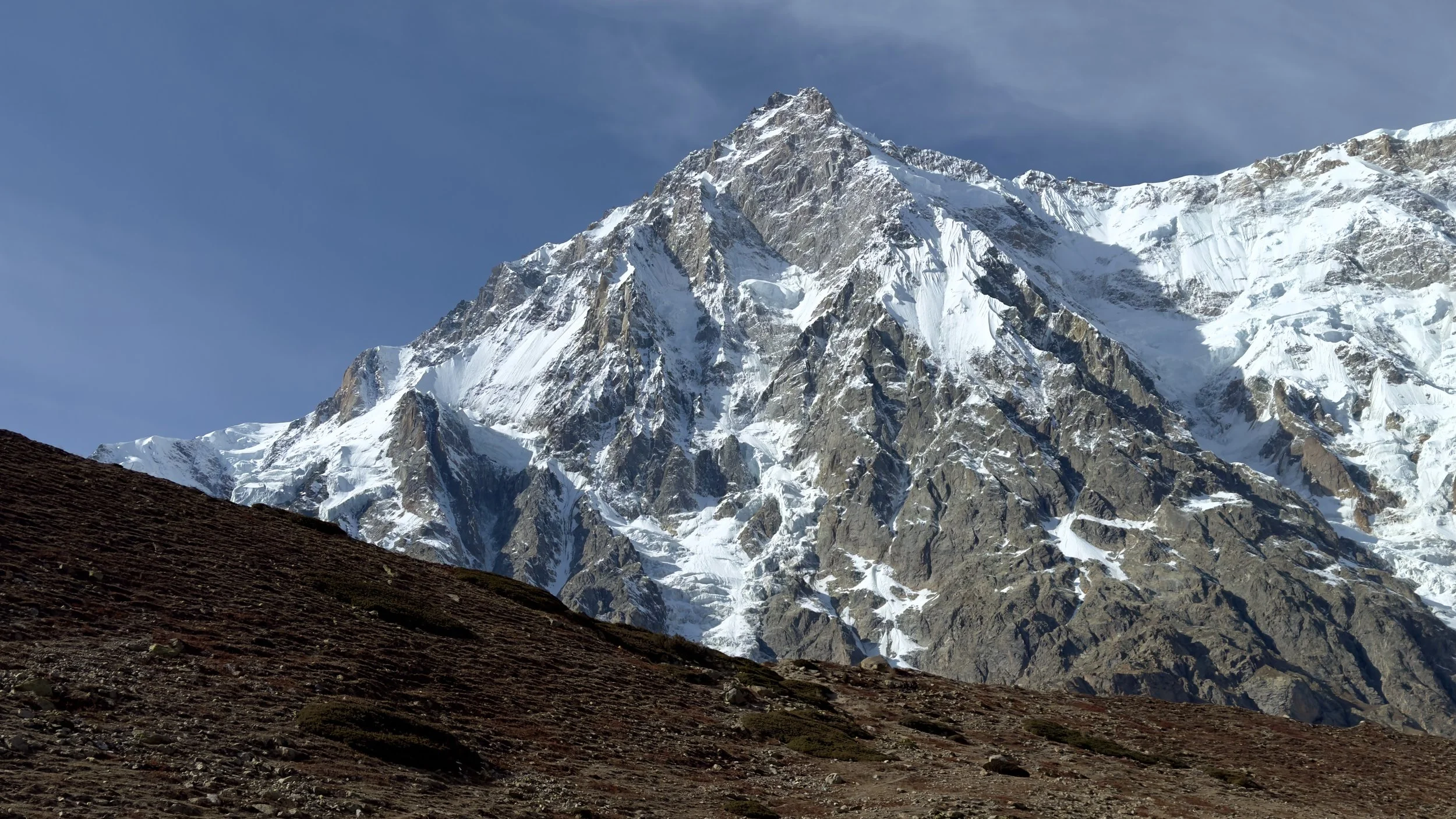
Nanga Parbat stands alone. Unlike most of the giants of the Himalaya, it isn't tucked into a crowded skyline of other 8,000-meter peaks. It's the western anchor of the entire range, rising by itself out of the earth. Once you see it, you understand the nickname.

The Rupal Face, on its southern side, is the tallest mountain face on Earth. 4.6 kilometers of sheer rock and ice, roughly 15,090 feet, rising in less than 2.5 miles. Climbers attempting it face brutal elevation gain with almost nowhere safe to acclimatize along the way. It's one of the deadliest mountains in the world, and it has earned that reputation the hard way. At base camp, around 11,500 feet, a stream runs downhill through the middle of camp, past the bodies and gravesites of climbers who never made it home. Base camp has quietly become a cemetery.
They call it The Killer Mountain.

I wasn't there to climb it.

I was there visiting a friend, a man who in his own way has a bit of a death wish, chasing his own project on that same mountain. But the day this photo happened, neither of us was thinking about the summit…mostly. We were there looking for a yak.

Specifically, a dzomo, a yak-cow hybrid, that had wandered off from a friend's herd in the village below months earlier and never come back.

Chasing Tea

The morning started simple enough. Quick breakfast of omelets, drive as far as the road allowed, then walk. We had one advantage: we'd made friends with the local tourist police. That morning, word got around that we were heading up toward high camp to search for the missing dzomo, and our friend on the force decided this was as good a reason as any to visit his parents further up the mountain. He loaded his entire family into a Toyota Hilux and joined us.

Those trucks are unstoppable. We crawled over rock and through tiny villages, waved through checkpoints by other tourist police who recognized our escort, and stopped constantly along the way, not for danger, but for tea. Tea and food, again and again, all the way up.

Eventually we hit the third and final end of the road, and the truck could take us no further. So we started walking.

We passed a hospital that looked like it hadn't seen a patient in decades. A half-built guest house sat waiting for mountaineers who hadn't arrived yet. We'd heard from a local Amil roughly where the dzomo might be. We did not follow his suggestion. Instead, we walked the opposite direction. Up. Just up.
Into the Valley

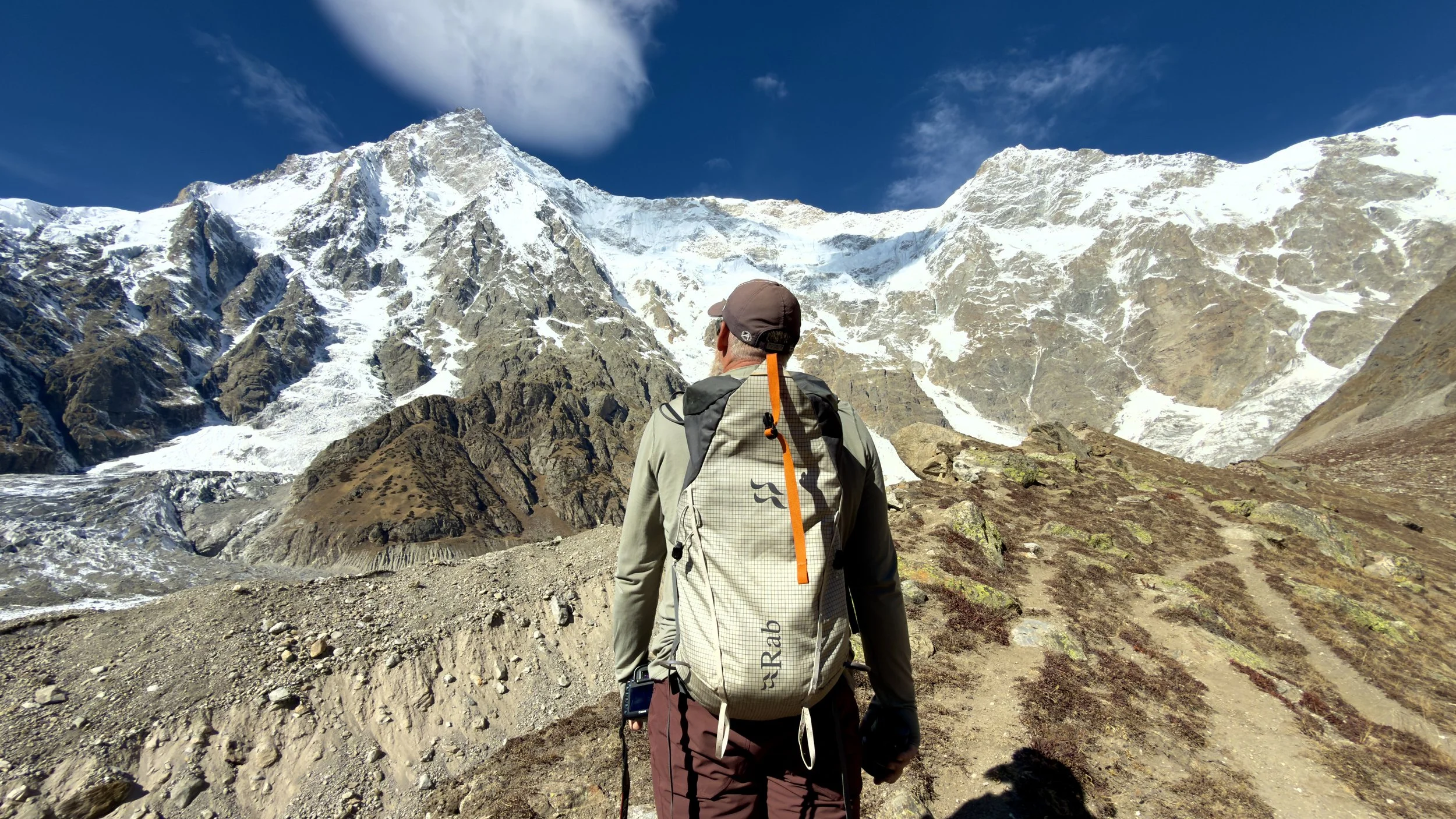
The path opened into a valley that didn't feel real. Ridgelines and glaciers stretched off in every direction, avalanches and rockfall echoing somewhere out of sight all day long, close enough to hear, far enough to feel safe. We walked below the same slopes climbers have died on for decades, past the graves at base camp, three of us fanned out across the terrain, still, absurdly, looking for a cow.

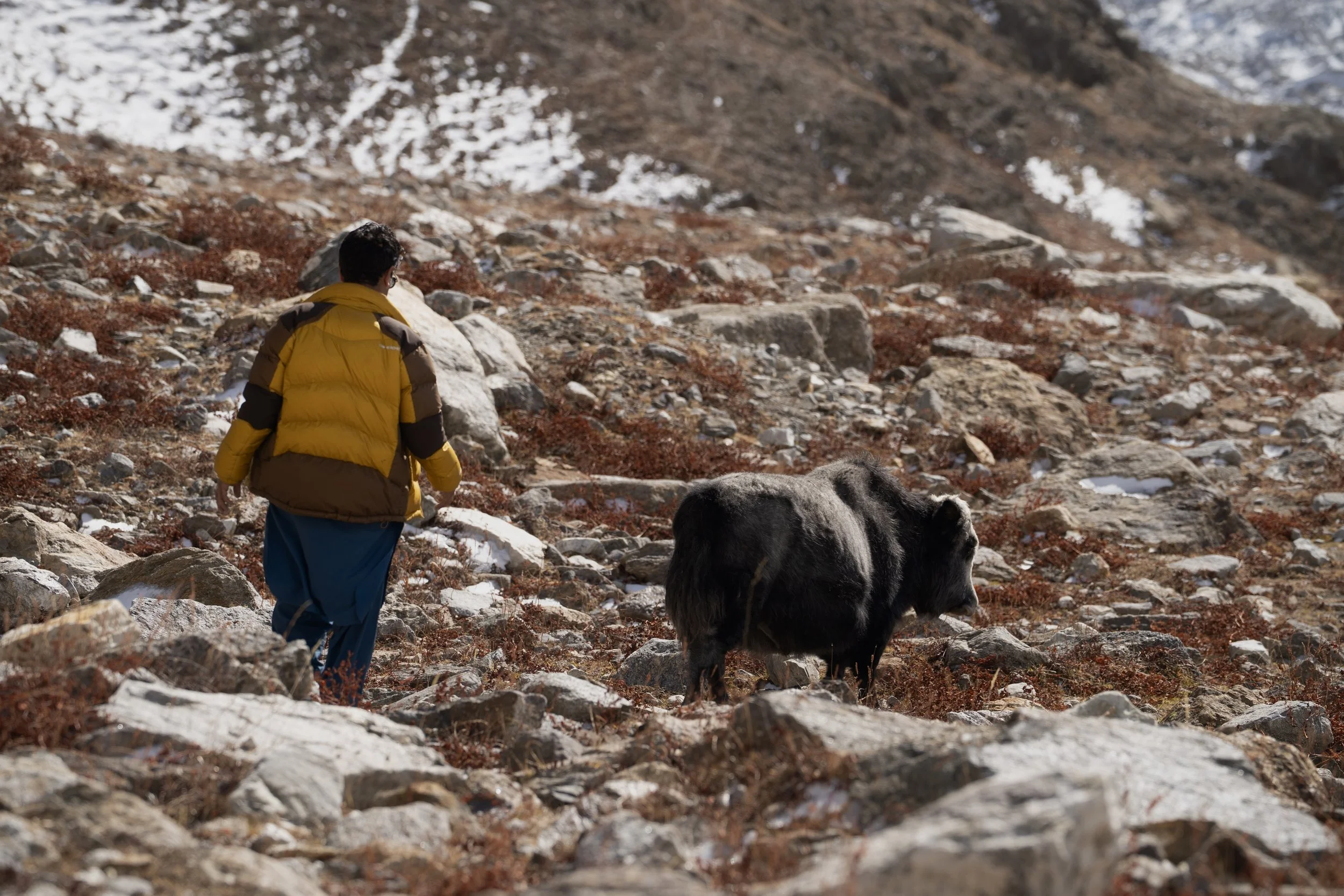
I took the route along the edge of the moving glacier. My friend cut up and around toward its crown. When the path dead-ended, we looked up and there he was, grinning, a big black shape standing next to him.

He'd found her.

She was stubborn and clearly dehydrated, in no hurry to go anywhere despite the heat pressing down on all of us. We coaxed her back down into the valley, found water, and let her drink her fill.
The Shot

On the walk back to the trucks, I turned around at base camp and looked up the valley we'd just come from. The mountain is so large my camera could never fit the whole thing while we were standing beneath it. The only way to actually frame Nanga Parbat was to walk away from it. As we chased the dzomo down the valley earlier, my shutter had barely stopped clicking. But this shot, the one that became "The Killer Mountain," only happened once I'd put enough distance between us and the wall of rock to see all of it at once, right at the edge of base camp.

One More Round of Tea

Back at the trucks, we drove up to high camp to collect our escort's parents, the whole reason for his detour in the first place. And of course, we couldn't just load up and leave. Not without tea and food first.

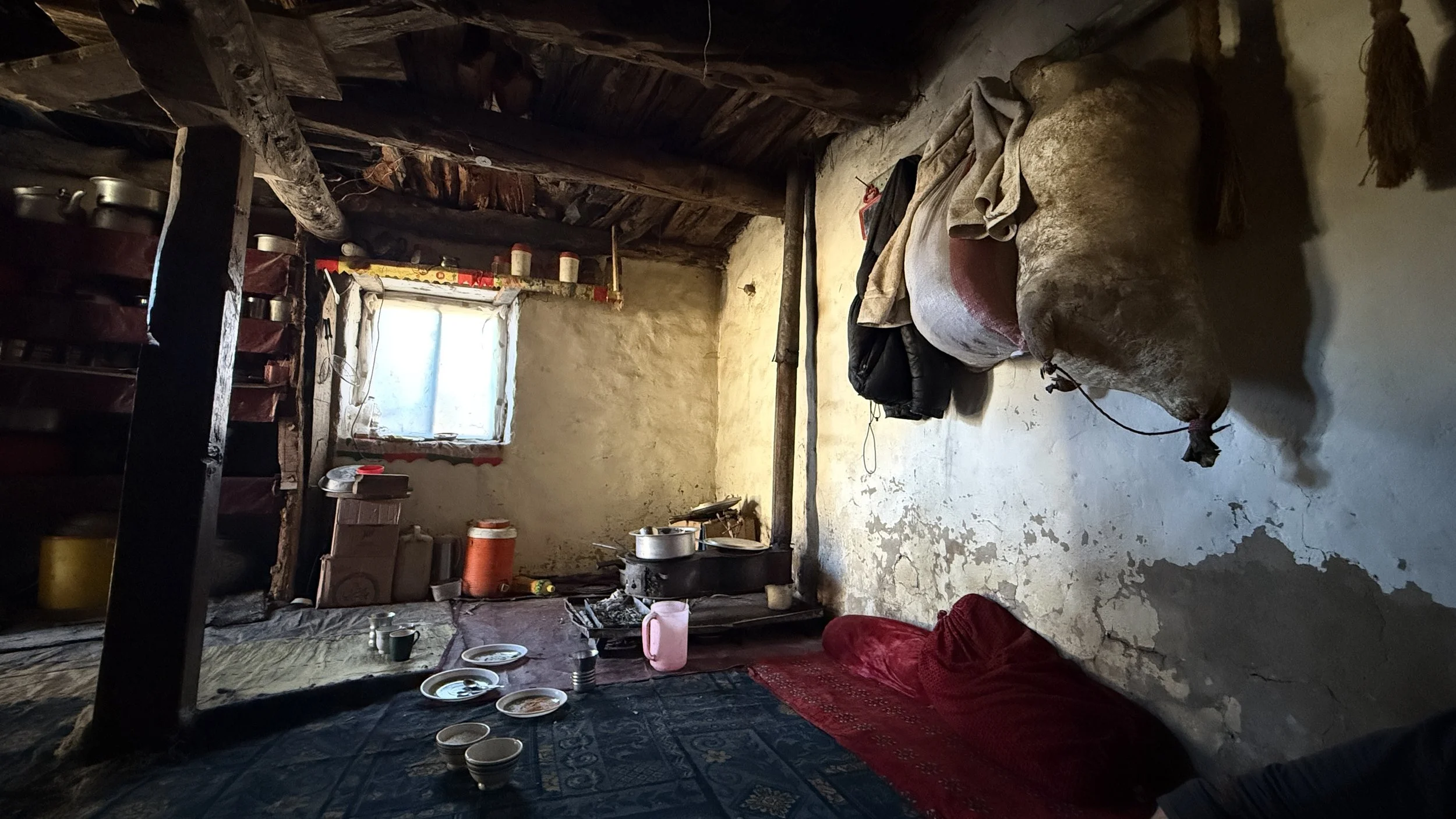
Drinks were squeezed straight out of an old wineskin, the actual body of a goat, still shaped like one. Chai was poured. Walnuts were cracked open by hand and passed around. Then, just as quickly as it had started, it was over. The entire ensemble climbed in alongside the rest of us, and we all piled back into the Hilux to head down into the valley toward home.
There's something almost funny about it, looking back. One of the deadliest mountains on the planet, the highest, steepest face in the world, a graveyard at its own doorstep, and the closest thing to danger we faced that day was a thirsty, stubborn yak who didn't feel like walking downhill.

The Killer Mountain sat there and watched our little search party.Enormous and indifferent while three guys and a tourist police family spent their day chasing tea, chasing rumors, and eventually, chasing a cow.
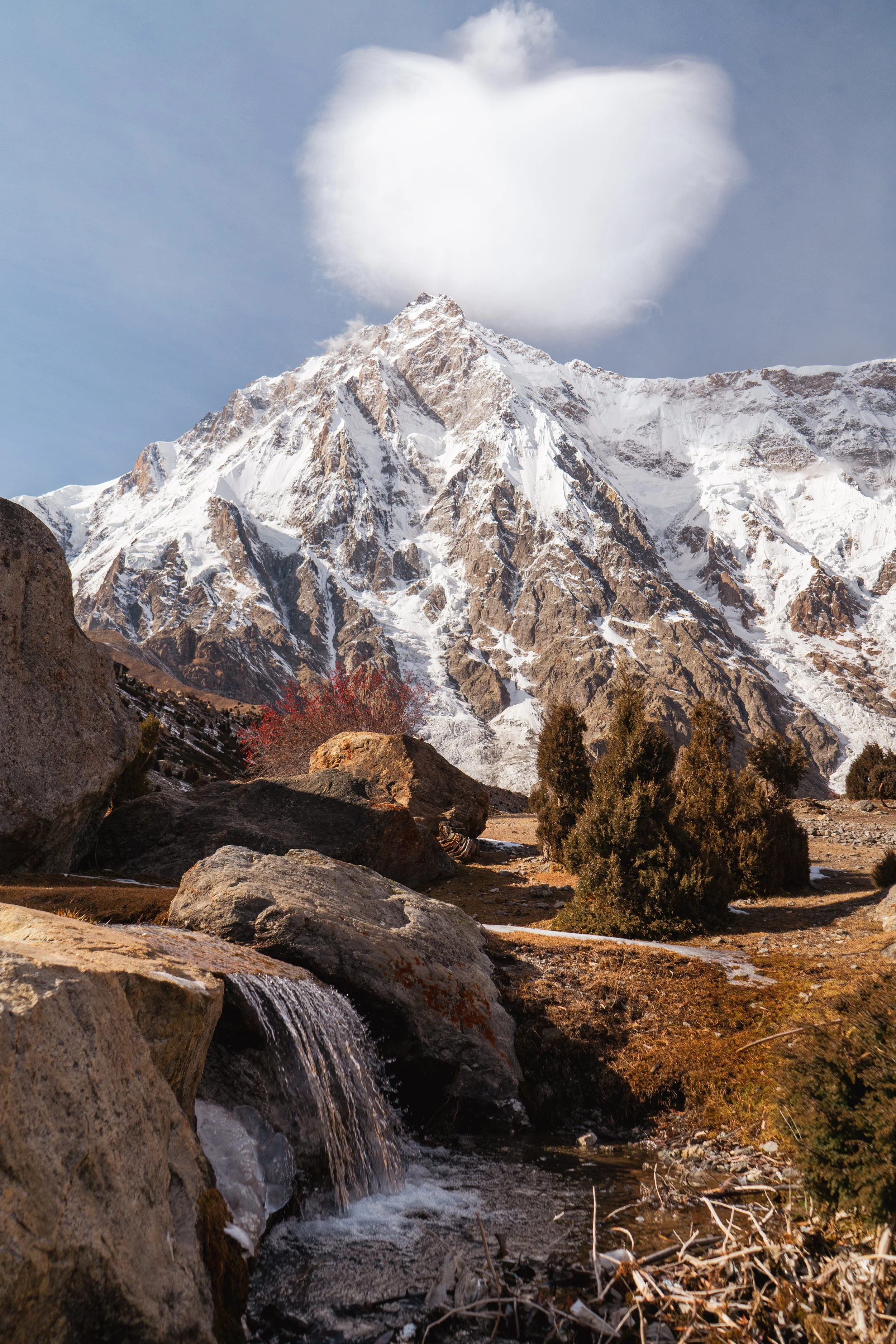
Nagna Parbat, The Naked Mountain, The Killer Mountain sits behind a waterfall at basecamp

*This image is available as a print here. Interested in a shoot or assignment in landscapes like this one? [Get in touch here] or here.
Humility, obedience, and dependence

Thoughts on Bushwhacking

Early this morning, I dropped into the bottom of a saddle between two mountains. The night before had been wild. High winds, thunder, lighting, and bit of rain. The temps were dropping fast, and I could tell it wouldn’t be long before snow would find us if the conditions held.

Standing there in the middle of the saddle, I felt defeated. The wind slammed into my face, unrelenting. Battered and exhausted, I hunkered down behind a tree and soaked up a sliver of warm sunlight.

I stared at my feet, searching for any excuse to not keep hiking.

So I ate.

Looked at my map.

Then drank some water.

Looked at my map again.

Still staring at my shoes, I remembered, my tent was wet! Perfect I’ve found an excuse.

I spread it out in the sun and waited. Even after it dried, I still sat there, not wanting to move. Eventually, I gave in, packed up, and started walking again just a touch more energized (it must have been the three Snickers).

As I rounded a bend, I looked up expecting a beautiful view only to see it.

A wall of willows. Heart sinking, dream crushing, endless, willows.

I was crushed. I wanted nothing to do with any sort of bushwhacking. Nothing. I was done. Physically and mentally.

Convinced I had to be lost, I leaned on my trekking poles, checked my navigation yet again, groaned out loud and proclaimed that I didn't deserve this (I was nearly 3,000 miles into the trail after all). I then shook my head in disbelief, farted, and put my head down.

Deuteronomy 8:2-3 New Living Translation (NLT)

Remember how the Lord your God led you through the wilderness for these forty years, humbling you and testing you to prove your character, and to find out whether or not you would obey his commands. Yes, he humbled you by letting you go hungry and then feeding you with manna, a food previously unknown to you and your ancestors. He did it to teach you that people do not live by bread alone; rather, we live by every word that comes from the mouth of the Lord.

Turns out, I wasn’t lost. I hadn’t taken the wrong path. I was led here. I was exactly where I needed to be.

Standing at the edge of the willows, I could see the faint trail threading through the mess of tangles. Everything in me wanted to turn back. But I had to go forward.

I thought of the Israelites being led through the wilderness, by fire at night and cloud by day, And realized I was in my own version of that story.

Brendan Leonard once wrote,

“Bushwhacking, although probably no one’s preferred method of backcountry travel, is a necessary skill, and not even so much a skill as a way of thinking…You are not doing it so much as you are withstanding it.

He’s right. You’re never really lost out there. As my buddy Matt Saxton says, “Wherever you are, there you are.

So you push forward. Through the thorns, through the mess. Maybe you’ll hit a lake, a ridge, or a high point. Hopefully something familiar shows up on the map, if you even have a map. Otherwise…good luck.

A Humbling Experience

“…humbling you and testing you to prove your character…”

I don’t deserve this! I yelled. I’m about to be a Triple Crowner! Where are the trail maintainers? Why do the Colorado Trail hikers get nice paths? This isn’t fair! I’m going to get soaked! My legs are going to be shredded!”

Maybe that was the point.

Would I keep trusting God and moving forward even if it meant another round of the infamous Willow Wash? Would I swallow my pride and accept this as what I get to do now?

How important is humility to God?

Out there, alone, that question got real.

Obedience

“…testing you to prove your character, and to find out whether or not you would obey his commands.”

So I stepped in.

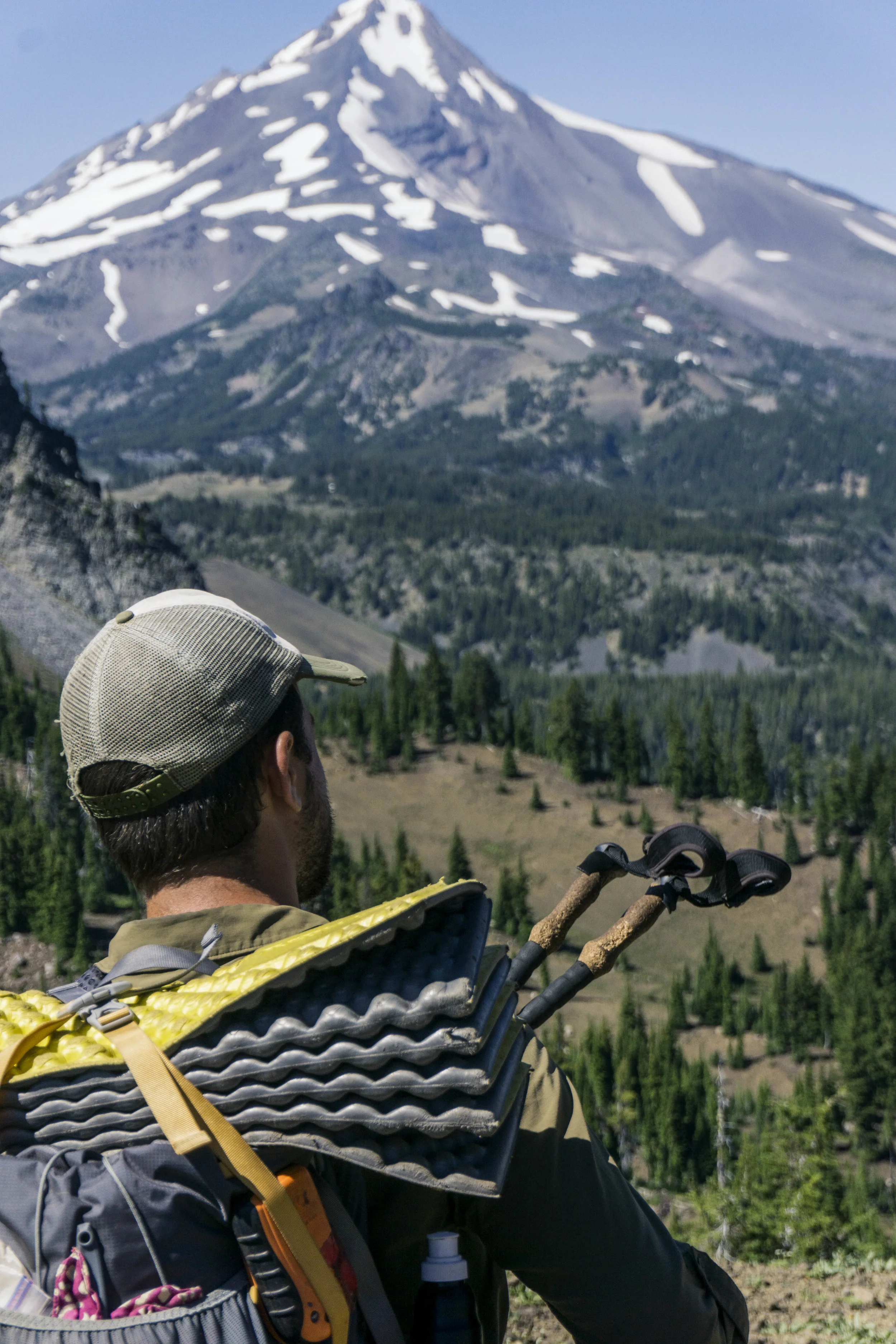
The first branch smacked my shin. Another caught my arm. I nearly lost a trekking pole in the chaos. But after a while, my head was down, and I was just pushing forward.

There is no right way to bushwhack. No coaches, no tutorials, no form to follow. You just do it.

And maybe that’s the point.

The outward expression of humility…is obedience.

Depending on God

I was so exhausted I finally broke. Every muscle in my body screamed. My pride, my comfort, even my sanity, it all felt gone. And yet, there was a strange peace in that torn shirt, bloody shin moment.

I couldn’t do it on my own, and that was okay. I just had to keep putting one foot in front of the other, letting the trail lead me, trusting that every thorn, every branch, every obstacle was part of the path I was meant to walk.

Somewhere standing in the middle of all that willowy chaos, I realized: this is what dependence looks like. Not dramatic or flashy. Not in control. Just leaning on the One who’s already mapped every inch of this journey, trusting that He knows the way better than I ever could.

So I pushed forward. Branch by branch, step by step, inch by inch. I got scratched. I got wet. I swore a little more than usual. But I also laughed, I kept moving, and I remembered that sometimes the hardest parts of the trail are where the lessons are found.

Bushwhacking isn’t fun. But sometimes the hard, messy, exhausting parts are exactly where God shows up and where we learn to trust Him most.


What does it mean to live by faith?

“Put your sword back into its place. For all who take the sword will perish by the sword.” Matthew 26.52

To-do list. Goal charts. 5 year plans. Productivity hacks. It all makes you feel important like you’ve got this. Except half the time you’ve just created a new hamster wheel to sprint on.

Jesus wasn’t anti-tools. But he was anti-striving. When He says, “put your sword back,” He isn’t saying “do nothing. He’s saying-quit trying to win a spiritual battle using human weapons.

Living by faith doesn’t mean checking out of life. It means you stop living like a project manager and start living like a follower.

As a climber, you plan, yes. you study topo maps, weather, risk. But the second your hands touch the rock, goal charts don’t matter anymore. You’re fully present. One move. One breath. One hold. That is faith.

Faith isn’t lazy. it’s surrendered. Less overthinking, more responding. Less “what if,” more “what now”. Less “strategize every out come,” more “listen and move when He leads".

Yes, culture taught us that our worth is in how busy we look. That if we’re not working toward a 5 year goal we’re wasting our existence.

But, honestly, how many times have things gone better when you finally unclenched and let God lead?

Maybe it’s not irresponsibility we fear. Maybe it’s loss of control.

Put the sword back. Walk with Him instead of fighting for Him. It’s weird at first . It’s quieter. Slower. Weirder. Humbling. And yet, it just might be the most productive thing you’ve ever done.